Healthy Vision Month: How Your Physical Health Impacts Your Eye Health

  • Home
  • Healthy Vision Month: How Your Physical Health Impacts Your Eye Health

Healthy Vision Month: How Your Physical Health Impacts Your Eye Health

May is Healthy Vision Month. Throughout May, the National Eye Institute encourages everyone to prioritize their eye health. In America, over 23 million people ages 18 and older have never had an eye exam. Most people do not think they have an eye problem until it is too late. Symptoms of many eye diseases do not appear in the early stages. Healthy Vision Month is a reminder to check your eye health and maintain healthy habits to keep your eyes healthy. 

Eye Exams 

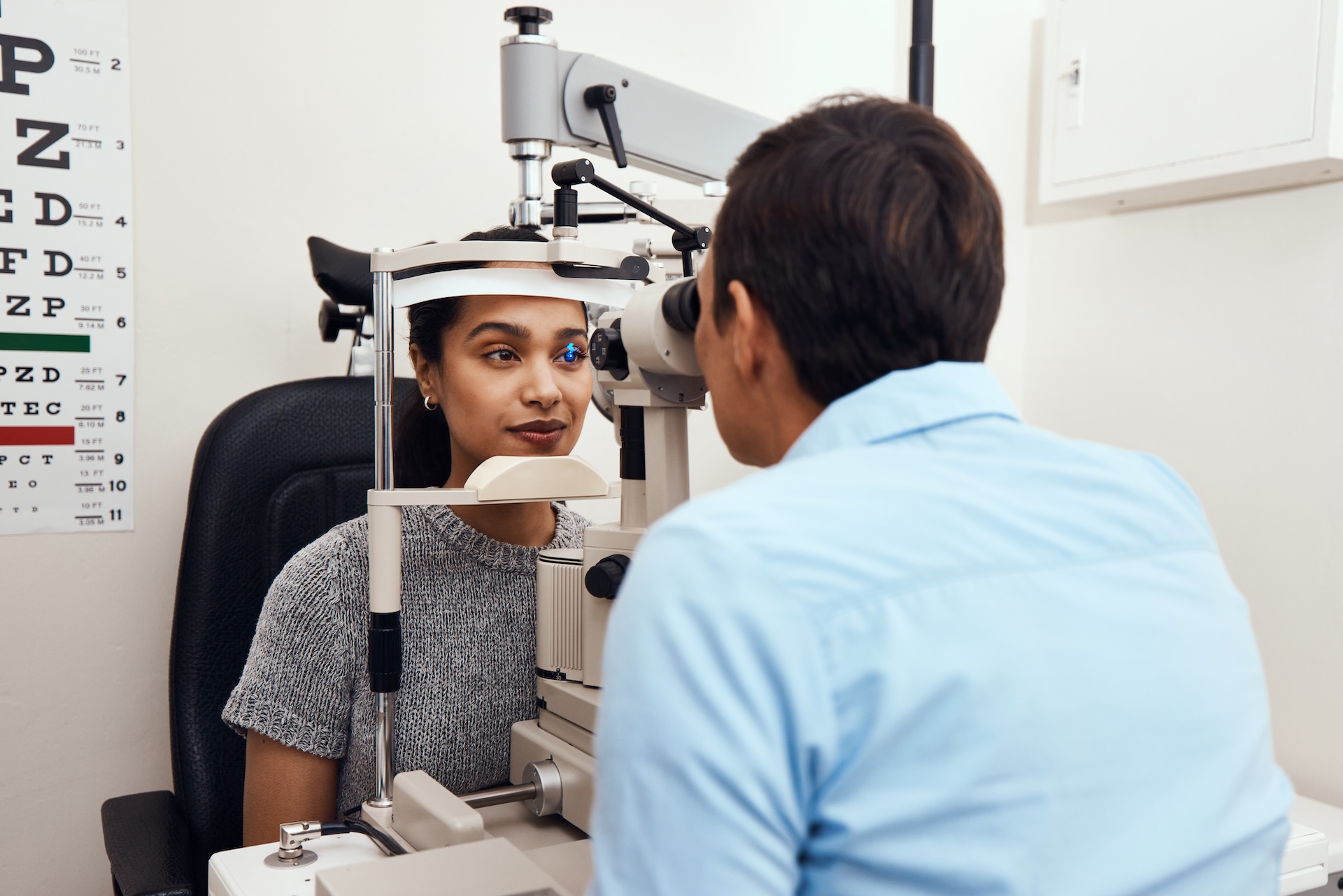
If you can’t remember the last time you had your vision checked, it is time to schedule an eye exam. During an eye exam, doctors use a multitude of tests to check various parts of your vision. An eye exam consists of these tests: 

  • Visual acuity test: checks if you are near-sighted or farsighted by asking you to read letters that are up close and far away 
  • Visual field test: checks your peripheral vision 
  • Eye muscle function test: checks for problems with the muscles around the eyes 
  • Pupil response test: checks how light enters your eyes using a small flashlight to see how your pupils react to the light 
  • Tonometry test: measures the pressure in your eyes by having a machine blow a small amount of air onto your eye 
  • Dilation: checks for problems with the inner parts of the eye by using eye drops to make your pupil widen 

A dilated eye exam is recommended every 1 to 2 years if you are at risk for eye disease. Your risk for eye disease is higher if you are in one of these categories: 

  • Over the age of 60 
  • African American and over the age of 40 
  • Have a family history of glaucoma 
  • Have diabetes 
  • Have high blood pressure 

Eye doctors commonly look for diabetic retinopathy, age-related macular degeneration, cataracts, and glaucoma. These diseases are hard to spot without a yearly eye exam. 

How to Protect Your Vision 

Besides an eye exam, there are ways to protect your vision and keep it healthy. Your overall health can reflect in your vision health. Below are some examples. 

  1. Doing some physical activity each day can help keep your blood pressure low and help your overall health. 
  2. Eating healthy benefits your eye health, too. Foods good for your vision include leafy greens like kale and spinach, and fish rich in omega-3 fatty acids, such as halibut, salmon, and tuna. 
  3. Wear sunglasses anytime you go outside. Whether it is cloudy or sunny, sunglasses should be worn at all times to avoid harmful UV rays. Protecting your eyes from the sun helps lower your risk of cataracts. 
  4. Quit smoking. Smoking raises your risk of developing cataracts and macular degeneration. 

How AFSPA Can Help 

Under AFSPA’s Ancillary Insurance Programs, we offer a Discount Care Program that can help you save money on vision, LASIK, and dental services. This 3-in-1 package comes with no waiting or complicated forms, and no limits on use.  

By joining the Discount Care Program, you receive the following benefits: 
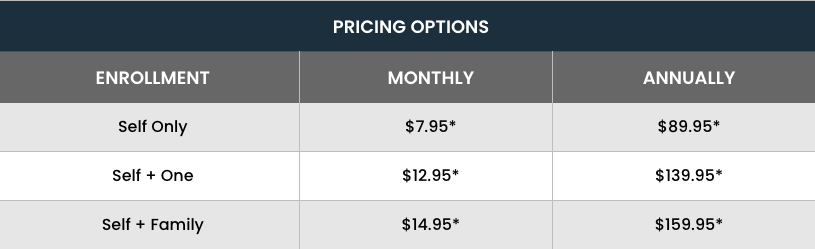
  • Access to personalized care from a trusted VSP network doctor 
  • One rate of $50 for eye exams** 
  • 15% savings on contact lens exams*** 
  • Special pricing on complete pairs of glasses and sunglasses 
  • Unlimited use on materials throughout the year 
  • Exclusive Member Extras and special offers 

Enroll here. 

*Brands subject to change
**This cost is only available with the purchase of a complete pair of prescription glasses; otherwise, you’ll receive 20% off an eye exam only.
***Applies only to contact lens exam, not materials. You’re responsible for 100% of the contact lens material cost.
This plan is not insurance.
Not available in Vermont or Washington. 

Recent Blogs